954-719-7955
Why Food Gets Stuck More During Orthodontic Treatment


If you wear braces or aligners, you already know the struggle. You finish a meal and suddenly you’re picking at your teeth for the next ten minutes. Food gets trapped in places it never did before. This is one of the most common things patients bring up during treatment, and the good news is, it makes complete sense why it happens.
The Simple Reason Behind It
Your teeth are shifting. That’s the whole point of orthodontic treatment. But while they move, small gaps and tight spaces open and close around the brackets, wires, and attachments. These spaces are perfect traps for food particles.
Before braces, your teeth sat in fixed positions. Food had predictable places to go. Now, everything is in motion, and the hardware on your teeth creates extra corners and crevices that food loves to hide in.
How Braces and Aligners Create Food Traps
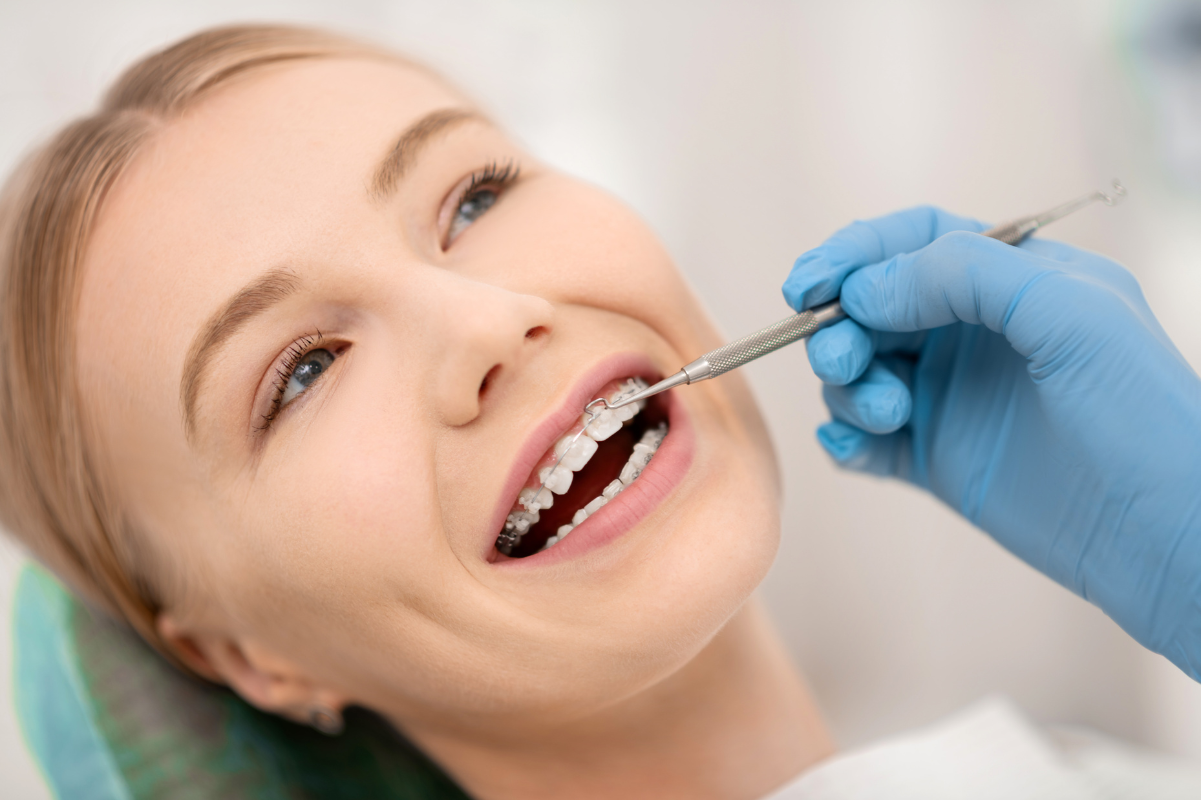
Brackets and wires sit directly on your teeth and create a small shelf between the bracket and the tooth surface. Food slides right into that gap and stays there.
Elastic bands stretch across multiple teeth and trap soft foods like bread, meat, and fruit.
Clear aligner attachments are small tooth-colored buttons bonded to your teeth. They stick out just enough to catch food particles when you’re eating without your aligners in.
Even the gaps that form between teeth as they shift can temporarily collect food debris. This is completely normal during treatment, but it does require more attention to cleaning.
Why This Matters More Than You Think
Food that stays stuck is not just annoying. It feeds bacteria. Those bacteria produce acids that break down enamel and inflame gum tissue. Patients in orthodontic treatment already have a harder time brushing and flossing properly, which means plaque builds up faster.
A good orthodontist will always walk you through proper hygiene at the start of your treatment. If you feel like you didn’t get enough guidance, that’s worth bringing up at your next appointment.
Many families in Pompano Beach and surrounding South Florida areas start treatment without fully understanding how much daily oral care changes once braces go on. The humidity and diet in the region don’t help either. Foods common in local culture like rice, beans, and plantains can be surprisingly sticky and hard to remove from brackets.
Foods That Are the Worst Offenders
Some foods are far more likely to cause problems during treatment. Here’s a quick breakdown:
Sticky foods: Caramel, gummies, peanut butter, and chewing gum. These pull on brackets and leave residue that’s hard to brush away.
Hard, crunchy foods: Chips, hard taco shells, and popcorn. These can break brackets and wedge pieces between wires.
Stringy foods: Celery, meat with tough fibers, and some greens. These wrap around wires and are hard to floss out.
Soft but dense foods: White bread, pasta, and overripe bananas. These compress into brackets and stick in the gaps.
You don’t have to avoid all of these forever. But being aware of them helps you make smarter choices during meals.
What You Can Do About It
The first step is changing your cleaning routine. Brushing twice a day is not enough during orthodontic treatment. After every meal, rinse your mouth with water at minimum. A quick brush is even better.
Tools that help:
- Interdental brushes: Small brush heads that fit between wires and brackets. Easy to carry and very effective.
- Water flossers: Great for flushing out debris from hard-to-reach spots. Many patients find these easier than traditional floss.
- Orthodontic floss threaders: These thread regular floss under wires so you can clean between teeth properly.
- Fluoride mouthwash: Helps protect enamel in areas that are harder to brush.
Your orthodontist should go over all of these options with you. If you’ve been searching for an orthodontist near me and you’re in the Pompano Beach area, make sure the practice you choose spends real time on hygiene education, not just adjustments.
What Happens If You Ignore It
Skipping proper cleaning doesn’t just cause staining. It leads to white spot lesions, which are early signs of tooth decay that show up as chalky patches around brackets after treatment ends. These can be permanent.
Swollen gums are also common in patients who don’t keep up with cleaning. Inflamed gum tissue can grow around brackets, making treatment take longer and sometimes making it painful.
Taking an extra five minutes each day to clean properly can save months of additional dental work later.
A Note on Clear Aligners
If you’re using clear aligners instead of traditional braces, you might think food trapping is less of an issue. You do remove your aligners to eat, which helps. But the attachments on your teeth still catch debris, and wearing aligners over unclean teeth traps bacteria against your enamel for hours.
Always brush before putting your aligners back in. Rinsing is not enough. Aligners can actually hold moisture and bacteria against your teeth if worn over a dirty surface.
Conclusion
Food getting stuck more during treatment is not a sign that something is wrong. It is a natural result of how orthodontic hardware interacts with your mouth. Understanding why it happens makes it easier to manage.
The key is building a simple, consistent cleaning routine and knowing which foods to be careful with. Small habits make a big difference over the course of a full treatment.
If you’re in the Pompano Beach area and want clear guidance on how to protect your smile during treatment, schedule a consultation with Light House Point Orthodontics. Our team makes sure every patient understands what to expect and how to care for their teeth properly throughout the process.
If you have questions about your current treatment or you’re just getting started, contact our Light House Point Orthodontics office and speak with one of our team members. You can also search for an orthodontist near me to find us and read what local patients have shared about their experience.
Frequently Asked Questions
1. Why does food get stuck in braces more than normal teeth?
Brackets, wires, and attachments create extra surfaces and small gaps that trap food particles. These spaces don’t exist on natural teeth without hardware.
2. How often should I brush my teeth during orthodontic treatment?
You should brush after every meal if possible. At minimum, rinse with water right after eating and do a thorough brush twice daily with fluoride toothpaste.
3. Is a water flosser better than regular floss with braces?
Both are useful. Water flossers are great for flushing debris, but floss threaders or interdental brushes can clean between teeth more precisely. Using both gives the best results.
4. Can food stuck in braces cause tooth decay?
Yes. Food debris feeds bacteria that produce acid. That acid breaks down enamel over time, especially in spots that are hard to clean around brackets.
5. What foods should I avoid during treatment?
Sticky, hard, and stringy foods are the biggest risks. Caramel, popcorn, hard candy, gum, and tough meats are common problem foods to limit or avoid.
6. Do clear aligners trap food too?
The aligners themselves don’t trap food because you remove them to eat. But the small attachments on your teeth still catch debris, and putting aligners back on without brushing traps bacteria against your enamel.
7. How do I floss properly with braces?
Use a floss threader or orthodontic flosser to guide floss under the wire and between each pair of teeth. Work slowly and be gentle near the gum line.
8. What are white spots on teeth after braces?
White spots are areas of early enamel damage caused by acid from plaque that wasn’t cleaned away properly during treatment. They can be permanent, which is why good hygiene during treatment matters so much.