954-719-7955
How Orthodontists Predict Tooth Movement During Orthodontic Treatment


Ever wonder how an orthodontist can hand you a treatment plan on day one and tell you almost exactly what your smile will look like a year or two later? It is not a guess. Predicting tooth movement is part science, part experience, and part technology working together. Understanding how this process works can help you feel a lot more confident about your own treatment plan, whether you are just starting out or already partway through.
This guide breaks down what actually goes into predicting how your teeth will move, step by step, so you know what is happening behind the scenes every time you sit in the chair. Whether you are meeting with an orthodontist for the first time or you have been in treatment for months, understanding the process makes the whole experience feel less like a mystery.
Why Tooth Movement Follows a Pattern
Teeth are not fixed in place. Each tooth sits inside a socket surrounded by a ligament, and that ligament allows for small, controlled movement when steady pressure is applied. Bone on one side of the tooth breaks down while new bone forms on the other side, letting the tooth shift gradually into a new position over weeks and months.
This process is biological, which means it follows patterns that have been studied and measured for decades. An experienced orthodontist in pompano beach can look at an X-ray and a set of measurements and predict, with real accuracy, how a tooth will respond to a specific amount of force applied in a specific direction. That predictability is what makes planning possible.
The Tools Behind an Accurate Prediction
Modern treatment planning relies on more than a visual exam. Digital X-rays, 3D scans, and photographs work together to build a full picture of your bite, jaw structure, and the exact position of every tooth. These images let an orthodontist measure angles, spacing, and root positions that are impossible to judge with the eye alone.
From there, most practices use specialized software that simulates tooth movement based on the data collected. This software factors in the type of appliance being used and calculates a step by step path from where your teeth are now to where they need to end up. The simulation is not a final answer on its own, but it gives your provider a strong starting point to refine.
What Factors Change the Prediction
No two smiles move the same way, even with similar starting points. A few key factors shape how a treatment plan is built and adjusted along the way.
- Root shape and length. Longer, straighter roots tend to move more predictably than short or curved ones.
- Bone density. Denser bone can slow movement slightly, while softer bone may allow faster shifts.
- Age. Younger patients often see faster tooth movement because their bone remodels more quickly.
- Bite pattern. Overbites, underbites, and crossbites all require different force directions and timing.
- Patient compliance. For removable appliances, how consistently they are worn directly affects how closely results match the original plan.
A skilled provider builds these variables into the plan from the start, then checks progress regularly to confirm the prediction is holding up.
How Braces and Aligners Apply Predictable Force
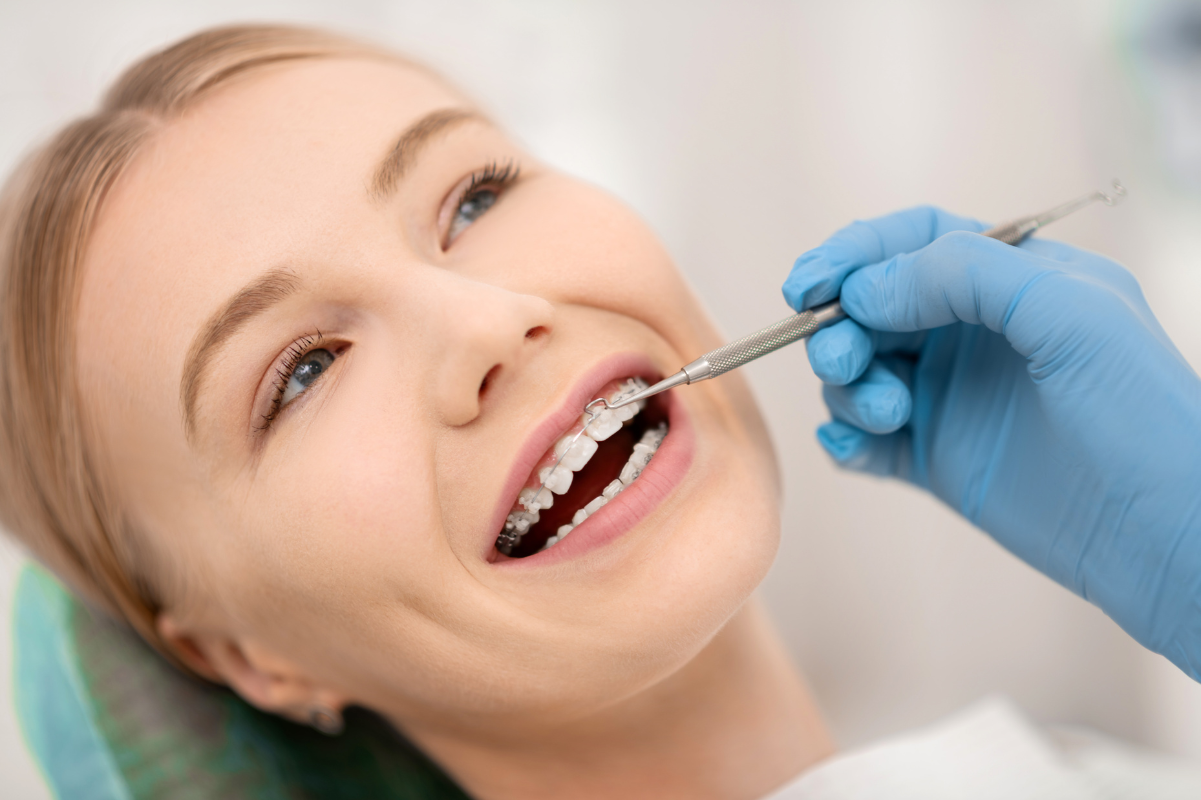
Traditional braces use brackets and wires to apply constant, gentle pressure on teeth. The wire wants to return to its original shape, and that tension pulls the teeth along with it over time. Orthodontists adjust wire tension and bracket position at each visit to keep movement on the planned path.
Clear aligners work differently but rely on the same biological principle. Each tray is slightly different from the last, and wearing it applies a small, calculated amount of pressure that nudges teeth toward the next stage. Because each tray is custom made based on the treatment simulation, the entire series is essentially a printed version of the predicted movement plan, tray by tray.
Braces vs Aligners: How Prediction Differs
| Factor | Traditional Braces | Clear Aligners |
| How force is applied | Continuous pressure from wires and brackets | Incremental pressure from each new tray |
| Adjustment frequency | In office visits every four to six weeks | Digital plan set before treatment, checked periodically |
| Prediction method | Combination of X-rays, models, and provider experience | Computer simulation mapped to a full tray series |
| Flexibility mid-treatment | Wire and bracket changes made in real time | Refinement scans if teeth drift off the planned path |
| Patient role in accuracy | Mostly passive, appliance is fixed in place | Wear time directly affects how closely results match plan |
Why Progress Checks Still Matter
Even the most advanced planning software cannot account for everything. Small differences in bone density, unexpected root resistance, or missed wear time with aligners can all cause actual movement to drift slightly from the original prediction. This is normal and expected, which is exactly why regular checkups exist.
During these visits, your provider compares where your teeth actually are against where the plan expected them to be. If there is a gap, small adjustments, whether that means retightening a wire or ordering a refinement scan for aligners, bring things back in line. Any experienced orthodontist in pompano beach will treat these checkups as a routine part of keeping the plan accurate, not an extra step. Patients searching for an orthodontist near me who tracks progress closely should ask how often these checkups happen and what the practice does when a plan needs a mid course correction.
What This Means for Your Own Treatment Timeline
Every prediction starts with a full diagnostic workup, which is why the first visit at most practices includes scans, photos, and a detailed conversation about your goals. From there, the simulation gives a realistic timeline, though most orthodontists build in some flexibility since biology does not always move exactly on schedule.
If you are comparing providers, ask how they build a plan and how often they check it against your actual progress. Anyone typing orthodontist near me into a search bar is really asking one question: will this plan actually hold up over time? A practice offering a clear orthodontist in pompano beach consultation should be able to walk you through their process step by step, not just hand you a generic timeline.
Meet Our Orthodontists
Knowing who is reading your scans and building your plan matters. At Lighthouse Point Orthodontics, two experienced doctors bring different strengths to every case.
Dr. Daniel Rozen, known to patients as Dr. Dan, trained at the University of Florida College of Dentistry before completing three additional years of orthodontic specialty training at New York University. While there, he published peer reviewed research and took part in clinical trials focused on faster orthodontic treatment. He holds the highest distinction in the field as a diplomate of the American Board of Orthodontics, a certification only a portion of practicing orthodontists ever achieve. He also practices as a second generation orthodontist, working alongside his father at a separate Coral Springs practice several days each month, and he stays current through ongoing conferences and ongoing education across the country.
Dr. Derek Haber grew up in Miami and is fluent in both English and Spanish, which helps him connect with a wide range of local families. He earned his Bachelor’s degree in Chemistry from Florida International University, graduating Cum Laude, before completing dental school at the University of Pennsylvania. He continued his training at the University of Florida, earning a certificate in Periodontics along with a Master’s of Dental Sciences focused on Oral Biology. That background gives him a deep understanding of how bone and gum tissue respond during tooth movement, which adds another layer of precision to treatment planning at the practice.
What Patients Say About Their Experience
Patients often mention how clearly the team explains what to expect before treatment even begins.
“Lighthouse Point Orthodontics is truly one of a kind. From day one, Dr. Rozen and his entire team have been amazing. The assistants are always so gentle and patient, and the ladies at the front desk are welcoming and organized every single visit. My child has been coming here for about 4 years now, and even after moving to Orlando, I still drive back just for appointments because the care and service here are that good. It’s hard to find a team that truly cares about their patients the way they do. Dr. Rozen and his staff make every visit a great experience, and you can tell they genuinely love what they do. If I could pack them up and bring them to Orlando with me, I absolutely would lol! If you’re looking for an orthodontist who treats you like family and provides amazing care, I highly recommend Lighthouse Point Orthodontics.” ★★★★★ (Jessica Sullivan)
That kind of responsiveness reflects the same attention to detail that goes into building an accurate treatment plan from day one.
Getting a Treatment Plan You Can Trust
Predicting tooth movement is not guesswork. It combines detailed imaging, proven biology, and years of clinical experience to build a plan that holds up over the full course of treatment. Regular checkups keep that plan accurate, catching small drifts before they turn into bigger delays.
If you are ready to see what a personalized, data driven treatment plan looks like, searching for an orthodontist near me is a good first step, and scheduling a consultation is the next one. A team that can explain exactly how your smile will move, and why, is one worth trusting with your treatment.
Frequently Asked Questions
1. How accurate are digital treatment simulations?
They are generally very close to actual results, though small adjustments are common as real biology responds slightly differently than a computer model predicts.
2. Does age affect how predictable tooth movement is?
Yes. Younger patients tend to see faster and sometimes more predictable movement because their bone remodels more quickly than adult bone.
3. Can a treatment plan change partway through?
It can. If progress checks show teeth drifting from the original plan, your provider may adjust wire tension or order new aligner trays to correct course.
4. Why do some teeth move faster than others?
Root shape, bone density, and the type of movement needed all play a role. Simple tipping movements tend to happen faster than movements that require the whole root to shift.
5. How often should I expect a progress check during treatment?
Most plans include checkups every four to eight weeks, depending on the type of appliance and how your case is progressing.
6. Does missing aligner wear time really affect the timeline?
Yes, significantly. Aligners rely on consistent daily wear to apply the pressure calculated in the original plan, so missed hours can push back your finish date.
7. What happens if my teeth do not respond the way the plan expected?
Your provider will reassess using new scans or models and adjust the plan accordingly. This is a normal part of treatment, not a sign that something went wrong.
8. Is one type of appliance more predictable than another?
Both braces and aligners can be highly predictable when used correctly. The right choice usually depends on your specific bite, lifestyle, and how consistently you can follow the plan.
Ready to See Your Own Smile Prediction?
Understanding how your teeth will move takes the guesswork out of orthodontic treatment and helps you feel confident from your very first appointment. If you are ready to get a clear, personalized plan built around your own smile, reach out to Lighthouse Point Orthodontics to schedule a consultation and see exactly what your treatment path looks like from start to finish.